
I didn’t expect to come back to vinyl.
Like most people of my generation, I grew up with it. Records were just how music worked. You’d sit down, put on an album, listen to it from beginning to end. You knew every song, every transition, every lyric. The album cover was studied in detail. The inserts mattered. It was an experience, not just background noise.
Then, sometime in my twenties, vinyl disappeared from my life.
CDs took over. Then DVDs. Then eventually everything went digital. Cleaner, more convenient, more modern. I got rid of my records without thinking twice. At the time, it felt like progress.
And for a while, it was.
Music became easier. Instantly accessible. Infinite. Whatever you wanted, whenever you wanted it. No friction, no effort, no waiting.
But somewhere along the way, something else disappeared with it.
I didn’t notice it at first. It’s not something you can measure or point to directly. But the experience changed. Music became something I consumed, not something I engaged with. It was always on, but rarely felt.
About ten years ago, almost on a whim, I bought a record player again.
Not because I had a plan. Not because I wanted to start a collection. Just because something in me missed the way it used to feel.
I didn’t know it at the time, but that small decision would quietly change how I spend some of my evenings.
Back to the Beginning
At first, it was simple.
I started buying back the records I had as a kid. Albums from the 80s that I knew by heart – the ones I had played over and over again in my teenage years. Nothing rare. Nothing particularly valuable. Just familiar.
There was something oddly satisfying about finding them again. Holding the same covers. Flipping them over. Dropping the needle and hearing that first crackle before the music starts.
It didn’t matter that some of them were scratched. Or that they came with that slightly moldy, basement smell that Michelle absolutely hates. None of that felt like a flaw to me.
If anything, it made them better.
They had history. They had lived somewhere before they got to me. They weren’t pristine, but they were real.
That was the part I hadn’t expected.
Listening to those records didn’t feel like going backwards. It felt like reconnecting with something I hadn’t realized I had lost. Not just the music itself, but the way I used to experience it – sitting down, paying attention, letting an album unfold instead of skipping through it.
Spotify, by comparison, started to feel different.
Endless. Frictionless. Convenient. And, if I’m honest, a bit hollow.
Beyond Nostalgia
Once I had worked my way through the records I remembered from my teenage years, something shifted.
I wasn’t just revisiting the past anymore. I started exploring it.
I moved into the 70s. Albums I hadn’t owned myself, but had heard growing up – the music my mom used to play around the house. ABBA, among others. Songs that had been in the background of my childhood, now suddenly in the foreground, experienced differently.
From there, it kept going.
The 60s. The 50s. Even a few recordings from the 40s.
At that point, it wasn’t about nostalgia at all. It was about discovery – but a different kind of discovery than what streaming offers. Not endless choice, but selective depth. Fewer options, more attention.
There’s something grounding about putting on a record that has existed for decades. Music that has survived not just trends, but time itself. These albums have lived through wars, moves, ownership changes, entire lifetimes. They’ve been played, stored, forgotten, rediscovered.
And somehow, they’re still here.
That changes how you listen.
It’s no longer just about whether you like a song. It’s about what has endured, and why. These records aren’t just recordings. They’re artifacts – small cultural monuments of their time.
And sitting with them feels very different than scrolling through a playlist.
Evenings with Miles
Somewhere along the way, this became a ritual.
Late evening, usually after Michelle has gone to bed, when the day has finally quieted down. No TV. No background noise. Just a drink, a record, and a bit of space to think.
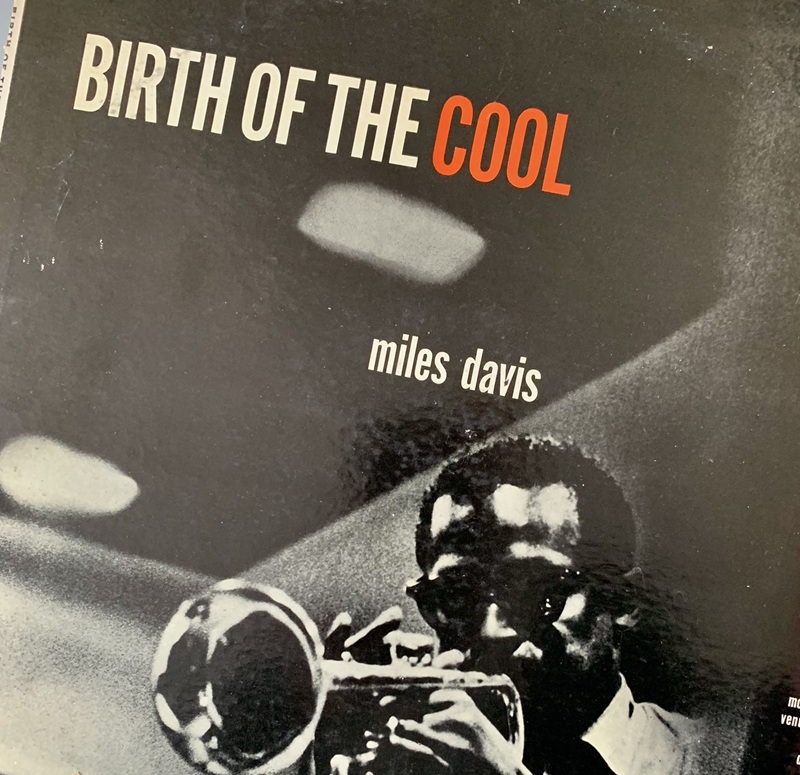
There’s one album I keep coming back to: Birth of the Cool by Miles Davis – the original 1961 pressing. Not perfect. A few pops, the occasional crackle. Nothing that would pass for “high fidelity” by modern standards.
And yet, it feels more alive than anything I can stream.
I put it on, sit down, and let it play.
No skipping. No checking my phone. No multitasking.
Just listening.
It doesn’t feel like entertainment. It feels like presence. A different pace. A different kind of attention. The kind that doesn’t come easily anymore.
It’s a small thing, objectively. Just music, played on an old format.
But in those moments, it feels like I’ve stepped out of the constant flow of everything else – the noise, the inputs, the endless stream of things competing for attention – and into something slower, quieter, more intentional.
And that, more than anything, is what keeps me coming back.
Imperfection, Soul, and Why It Matters
Michelle doesn’t get it why I like them. She looks at some of these records – scratched, slightly warped, carrying that unmistakable “old basement” smell – and asks the obvious question:
Why would you spend money on this when you can listen to a perfectly clean, remastered version on Spotify?
It’s a fair question. And objectively, she’s right.
Streaming is better in almost every measurable way. It’s cleaner. More precise. More convenient. You get the same album in ultra-high definition, instantly, without leaving your chair.
But that’s exactly the point.
One has a soul.
The other is just a bunch of digital 0s and 1s.
The pops, the clicks, the imperfections – they’re not flaws. They’re part of the experience. A reminder that this thing existed long before it got to me. That it has a history. That it has been played, handled, moved, and preserved over time.
Streaming removes all of that. It strips music down to pure signal – just data, delivered flawlessly.
And in doing so, it also strips away something harder to define.
Call it texture. Call it presence. Call it soul.
It’s not that one is better than the other in an absolute sense. It’s that they offer fundamentally different experiences. One optimizes for efficiency. The other for attention.
And at this stage of my life, I find myself choosing the latter more often than not.
Because not everything has to make sense. Sometimes it just has to make you happy.